
The Early Years: From Chamartín to a Global Stage
When it first opened its doors in 1947, the stadium was originally named Nuevo Estadio Chamartín.At the time, it had a modest initial capacity of 75,145 spectators, with only 27,645 seated and the rest designated for standing fans.
The vision for the stadium was driven by club president Santiago Bernabéu, who wanted a venue befitting the growing ambitions of the club. In 1955, the club’s members unanimously voted to rename the stadium in his honor.By that same year, the first major expansion was completed, pushing the capacity to a staggering 125,000 spectators and making it the largest stadium of any participating club in the newly established European Cup.
Defining Milestones and Historic Matches
The stadium’s reputation as a premier global venue was cemented through continuous upgrades and high-profile events:
- 1957:The Bernabéu became the best-lit stadium in the world and hosted its first European Cup final, where Real Madrid defeated Fiorentina 2-0.
- 1964:It hosted the European Nations’ Cup final, seeing Spain claim their first major international silverware by defeating the Soviet Union 2-1.
- 1982: A major redevelopment was undertaken to host the FIFA World Cup. A roof was added to cover three stands, and the stadium hosted the final where Italy defeated West Germany 3-1.
- 2018:The stadium made unique history by hosting the Copa Libertadores final between River Plate and Boca Juniors, the first time the showpiece was staged outside the Americas.
The Modern Era and the Billion-Euro Transformation
Entering the 21st century under the presidency of Florentino Pérez, the Bernabéu underwent modernizations that transformed it into a year-round commercial asset, including the launch of the highly profitable Tour Bernabéu.
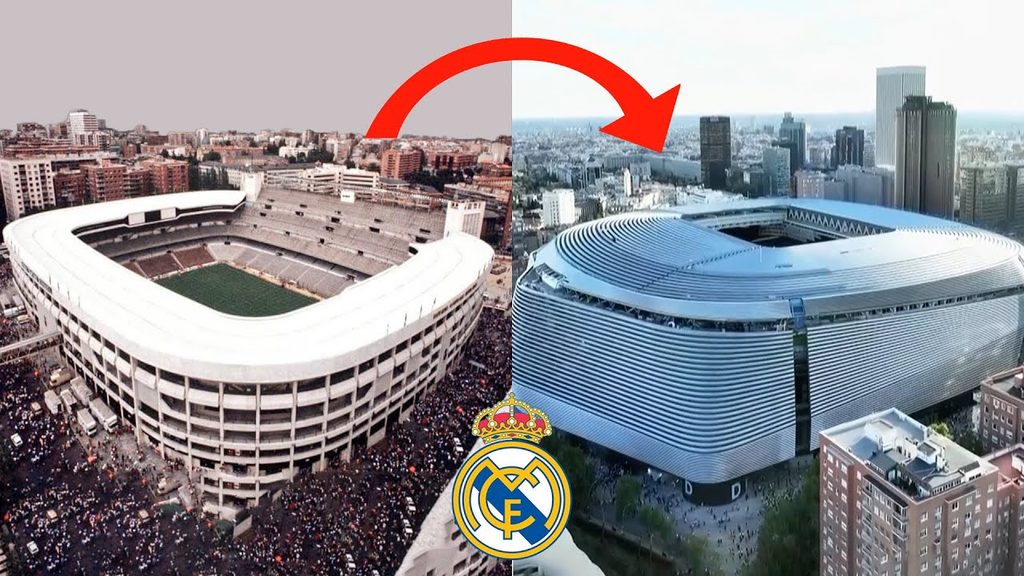
In 2019, Real Madrid embarked on the most ambitious project in the stadium’s history.Reaching a cumulative cost of approximately €1.4 billion by the 2025-26 financial year, this state-of-the-art redevelopment completely modernized the venue:
- Retractable Infrastructure:A fully retractable roof and a groundbreaking subterranean pitch-storage system divided into 1,500-tonne trays, allowing the stadium to host major concerts and non-sporting events without damaging the grass.
- Digital Integration:The installation of a massive 360-degree video scoreboard running around the inner upper tier.
- Iconic Exterior:A new wraparound facade constructed from stainless steel louvers that can project images and lighting, fundamentally altering the Madrid skyline.
Today, the Santiago Bernabéu is not just a football stadium; it is a multi-functional urban landmark that drives record-breaking revenue for the club while honoring a legacy built on sporting excellence.